

Wedderburn Goldfields Ltd Exploring the Historic Wedderburn Goldfield
Wedderburn Goldfields Ltd (WGL) and its wholly owned subsidiary PSD Minerals Pty Ltd (PSD) are actively exploring the Wedderburn area.
Wedderburn Goldfield
Wedderburn Goldfields Ltd (WGL) aims to re-establish underground gold mining in Victoria’s historic Wedderburn Goldfield — a 51km² goldfield, the majority of which is within Exploration Licences EL6302 and EL8296. The goldfield spans approximately five kilometres east–west with its strike length extending up to 7.5 kilometres. The goldfield is positioned on the western margin of the Bendigo geological structural zone — Victoria’s highest gold producing zone and home to some of the state’s major gold-production centres including Bendigo, Fosterville, Ballarat and Chewton. Anticlines and synclines produced the most gold within the 65 million-ounce Bendigo Zone. The Wedderburn Goldfield has three historical gold-producing reef clusters — western, central and eastern.
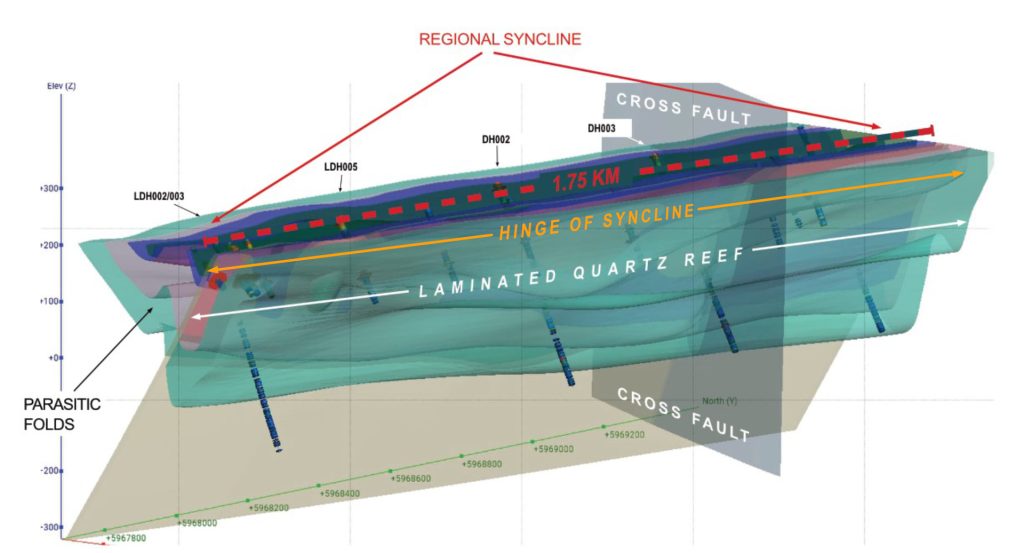
WGL’s 1.75 km strike-length proof-of-concept diamond drilling program, conducted within a defined drill corridor situated in the central cluster of quartz reefs, has established a new interpretation of a regional syncline using sedimentological core logging and correlation techniques.
This syncline includes a specific sedimentary horizon (coarse sandstone), referred to as “LASH50”. It should be noted that the “LASH50” horizon has not yet been drilled or explored within the core of the syncline hinge.
Gold assays from diamond core drilled within the eastern leg of the regional “LASH50” syncline have identified a gold-mineralised laminated quartz reef (LQR) along the 1.75 km strike length of the diamond drilling program. The highest-grade gold intersection within this laminated quartz reef was recorded in diamond drill hole LDH002, returning 3.49 g/t Au over 0.2 m from 89.0 m to 89.2 m downhole.
These new results have provided data-backed drill-ready targets within the full 1.75 km drill corridor. They have also enhanced the Company’s geological understanding and enabled the development of a new structural interpretation of the goldfield, providing a strong foundation for future exploration and resource discovery.
This interpretation is based on:
-
- Ultra-detailed sedimentary and petrophysical logging.
- Recognition of a major regional syncline in the 1.75 km drill corridor in the Central Zone.
- Specialist structural geological mapping.
- Drilling that ground-proofed reinterpreted geophysics.
Pathfinder minerals, including arsenic and carbonate spotting, have been found in an anticline/syncline reverse fault setting, which will allow WGL to more confidently plan its search for discreet, in size, high-grade gold dilation zones within the drill corridor and the wider exploration licence.
Join Our Mailing List
HISTORICAL GOLD PRODUCTION
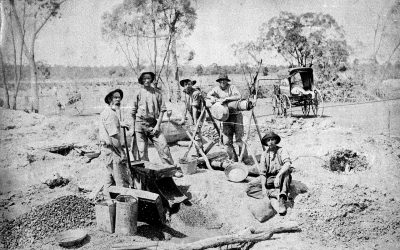
Edwards et al (2001) estimated 115,954 oz au was derived from alluvial deposits, but this is almost certainly a gross underestimate. Many unrecorded nuggets have been found by metal detectorists in the last 40 years.
PROOF-OF-CONCEPT DRILLING
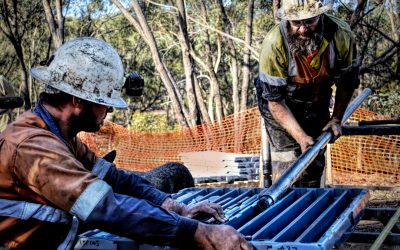
WGL’s 3,300-metre proof-of-concept diamond drilling program successfully delineated a newly interpreted regional syncline and associated anticlines. The mineralised synclines and anticlines extend across the full 1.75 km drill corridor.
DATA-BACKED DRILL-READY TARGETS
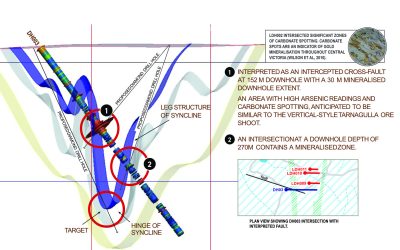
Wedderburn’s new underground interpretation of the 1.75 km position of the Regional Syncline and associated Anticline allows for future testing of the mineralised hinge zones in the newly interpreted syncline and associated anticlines.
Modern Exploration Techniques
The Bendigo Geological Structural Zone experienced three distinct gold events: 445, 410, and 370 million years ago, and has the greatest gold production of all Victorian geological zones, totalling more than 65 million ounces. It contains most of the state’s 7,000 historical gold mines in major historical mining centres such as Bendigo, Ballarat, Castlemaine and Clunes, and the significant modern gold production centre at Fosterville.
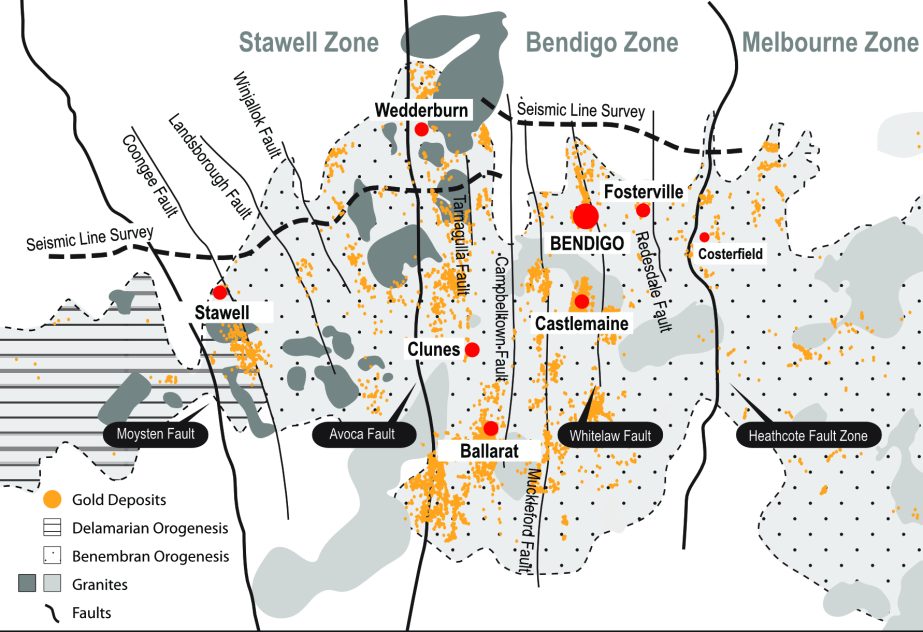
Wedderburn is no different. WGL interprets its exploration data to show a series of regularly spaced major anticlines and synclines across its tenements that are essential for forming the high-grade discreet dilation zones that have produced the most gold within the Bendigo Zone.
This interpretation is based on:
- Ultra-detailed sedimentary and petrophysical logging.
- Recognition of a major regional syncline in the 1.75 km drill corridor in the Central Zone.
- Specialist structural geological mapping.
- Drilling that ground-proofed reinterpreted geophysics.
Wedderburn has all the essential geological characteristics of a significant central Victorian goldfield like Bendigo:
- A now predictable system of major, regional anticlines and synclines associated with reverse faulting.
- Important transverse cross-faulting.
- An aggregate of 33 km of auriferous reefs, mined from 1851 to the 1860s, mapped by Whitelaw in 1907 and ground-proofed by Willman in 2022.
- 178 strike kilometres of prospective N-S trending, steeply dipping fault and hinge lines, which include 255 locations with an interpreted fault-fault or fault-hinge line intersection.
- 258 targets identified from Geophysics on WGL’s tenements that warrant further investigation.
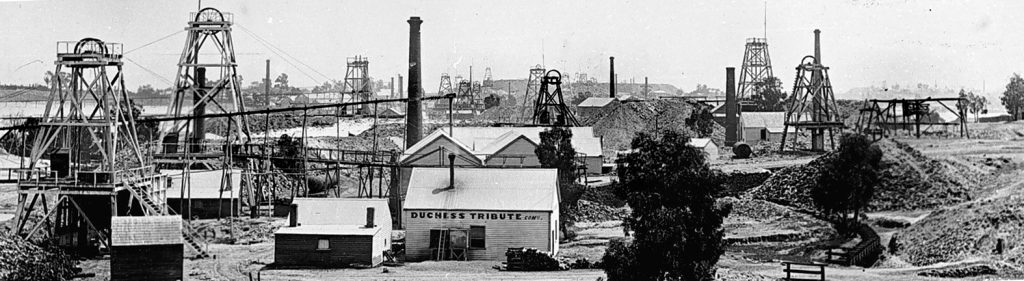
What does a historic central Victorian goldfield look like?
The northern end of the Bendigo Goldfield looking south circa 1895. The Bendigo Goldfield contains 37 gold-bearing quartz reefs extending 16 km by 4 km. More than 5,000 mines operated in that area. Because of its scale and success, the Bendigo Goldfield readily attracted capital/funding. It involved many discrete in size and highly profitable mining leases. The majority of Bendigo’s gold production came from discrete gold zones, which essentially breached anticlines and synclines associated with reverse fault structures.